

Quick Answer to Your Questions
Can push-ups cause elbow pain?
Yes, push-ups can cause elbow pain—but the exercise itself is rarely the true problem.
Why does my elbow hurt during push-ups?
In most cases, elbow pain during push-ups shows up because the muscles and tendons involved are already stiff, overworked, or lacking proper pliability. This makes the elbows less able to tolerate stress during repeated pressing movements.
Why pain persists: With push-ups, elbow pain is rarely just about the elbow itself. It usually comes from how repeated pressing overexerts the arms, how restricted muscles and irritated tendons handle stress during push-up movements, and compensation patterns that develop over time.
Eliminate Elbow Pain — Without Guesswork
Our step-by-step program is designed to eliminate elbow pain fast. Ready to get started?
Push-Ups Mechanics That Can Contribute to Elbow Pain
I’ve been training for over 10 years and have personally experienced—and resolved—elbow pain from push-ups.
The push-up mechanics and factors below are important to understand because they can contribute to elbow discomfort. However, they are not the main cause of elbow pain during push-ups.
This article explains the underlying cause.
Hand Position During Push-Ups
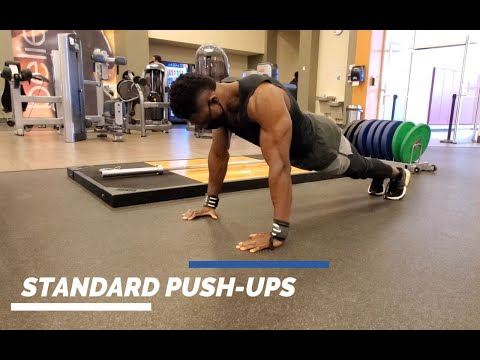
Standard Push-Ups
Incorrect hand placement can create excessive tension in the wrist and elbow, leading to irritation.
Wide Push-Ups
A wider hand position increases stress on the outer elbow tendons and shoulder joints.
Narrow (Diamond) Push-Ups
This variation increases pressure on the triceps and inner elbow, which may lead to discomfort.
Push-Up Variations and Exercise Selection
Incline Push-Ups
Reduce resistance, but improper body alignment can still irritate the elbows.
Decline Push-Ups
Increase upper-body load, placing greater stress on the elbow tendons if not controlled.
Plyometric and Explosive Push-Ups
Variations such as clap, superman, and chest slap push-ups place high impact forces on the elbows, increasing the risk of irritation.
Unilateral and Uneven Push-Ups
Single-arm and uneven push-ups require greater stabilization and may overload one elbow more than the other, leading to imbalance-related discomfort.
Added Resistance and Load
Resistance Band Push-Ups
Bands add variable tension, which can create uneven stress on the elbows if used improperly.
Weighted Push-Ups
Adding external weight increases total load and may strain the elbow tendons without proper control and form.
Equipment and Stability Tools
Push-Up Bars
Promote wrist alignment but can stress the elbows if grip mechanics are poor.
Medicine Ball Push-Ups
The unstable surface increases pressure on the elbows and wrists.
Stability Ball and TRX Push-Ups
Engage stabilizing muscles but may irritate the elbows if alignment and control are lacking.
Bosu Ball Push-Ups
Added instability can overexert the elbow tendons, especially when joint positioning is off.
Elbow Position and Joint Mechanics
Elbow Position and Degree of Elbow Bend
Keeping the elbows flared too wide or tucked too close alters load distribution, increasing tendon irritation risk.
Load Management and Programming
Weight Load
Body weight acts as resistance during push-ups. Advanced variations increase joint stress if weight is poorly distributed.
Overall Tendon Stress
Rapid increases in volume, intensity, or variation overload the elbow tendons and contribute to discomfort.
Type of Workout Program
Overusing push-ups or failing to allow adequate recovery can lead to repetitive stress issues. Exercise variation and rest are essential.
Wrist and Forearm Stress
Overload of the Wrist Flexors and Extensors
These muscles stabilize the wrist during push-ups. Excessive load can lead to discomfort and inflammation at the outer elbow.
Wrist Stability
Unstable wrists transfer unnecessary tension to the elbows, increasing pain and injury risk.
Alternative Exercises to Avoid Pain During Push-Up Workouts
If push-ups cause elbow discomfort, consider the following alternative exercises.
They target similar muscle groups while reducing stress on the elbow tendons, making them effective options for maintaining strength and conditioning during recovery or while managing elbow pain.
You can find instructions of the exercises below on the JEFIT exercise library.
- Dumbbell Pullover (with Straight Arm): Strengthens the chest and lats with a controlled, straight-arm motion, reducing elbow strain.
- Machine Fly (using Pec Deck Machine): Provides a guided path to isolate the chest muscles without placing unnecessary pressure on the elbows.
- Cable Chest Fly or Crossover: Offers adjustable resistance and natural range of motion to target the chest while protecting the elbow tendons.
- Chest Fly: Using dumbbells or cables, this exercise isolates the chest with minimal elbow involvement.
- Wall Push-Up (with Wide-Arm): A low-impact variation of push-ups that reduces the load on the elbows and wrists.
- Knee Push-Up (with Wide-Arm): Decreases body weight resistance, making it easier on the elbow joints.
- Incline Knee Push-Up: Combines incline and knee variations for minimal resistance, reducing elbow and wrist tension.
Helpful Tips to Avoid Pain
- Tip #1: Stretch the triceps, forearms, and shoulders between sets. Gentle stretches, such as overhead triceps and wrist flexor stretches, improve flexibility and prevent tightness in the elbow tendons. You can find demonstration of forearm stretches in this YouTube video.
- Tip #2: Use elbow self-myofascial release (SMR) exercises on your arms the night before push-up workouts. This method relaxes tight muscles, reduces tendon stress, and prevents injury.
- Tip #3: For a full lifter’s guide that covers causes, fixes, and FAQs, see: Elbow Pain from Working Out.
Ready to take the next step?
Our elbow pain program is designed to help eliminate pain, so you can train without limitations.
Contact About Privacy Terms | Copyright © 2026 TitaniumPhysique LLC.
Disclaimer: (1) Fitness results vary by individual effort, as such, individual results may vary; (2) We use Microsoft Clarity on our website to ensure you have the best possible browsing experience. Our privacy policy has more details.