
Hip Pain
(A Complete Guide with Relief Exercises)
Written by: Nurudeen Tijani (Wellness and Pain Relief Fitness Coach)

Article Summary
- People with sedentary lifestyles or occupations, as well as those engaged in physical activities, often experience discomfort or pain in the hip.
- The primary causes include magnesium deficiency, muscle restriction, and chronic inflammation.
- Why it becomes chronic: Even when the hip itself is treated, symptoms often return due to muscle stiffness, how muscles and tendons absorb stress, and compensation patterns that develop over time.
- This article explores these causes and outlines effective non-surgical self-treatment and prevention strategies for managing hip pain.
Key Points
- Root Causes: Magnesium deficiency, muscle restriction, and chronic inflammation are the underlying causes of hip pain.
- Conditions: Hip bursitis, snapping hip syndrome.
- Symptoms: Stiffness or pain when sitting, standing, or walking; discomfort in the hip after prolonged activity; radiating pain to the thigh or groin; muscle spasms in the glutes, hip flexors, or hamstrings; snapping, crackling, or popping sounds in the hip during activities.
- Non-Surgical Treatment: Use self-myofascial release (SMR) exercises to massage and keep the hip flexor and supporting muscles pliable. SMR is an effective and reliable way to relieve chronic hip pain.
Eliminate Hip Pain — Without Guesswork
Our step-by-step program is designed to eliminate hip pain fast. Ready to get started?
Causes of Hip Pain
In this section, we’ll cover the root causes, muscle and joint issues, and general factors contributing to this condition.
Root Causes
Root Cause #1: Magnesium Deficiency
Around 70 to 80% of people in the U.S. are magnesium deficient, which significantly impacts muscle health, particularly in the hip and supporting muscles.
Magnesium is essential for muscle relaxation, while calcium promotes muscle contraction. When magnesium levels are low, muscles tend to remain tense, leading to strain on tendons, overburdened ligaments, and inflammation in the hip.
Approximately 40% of the body’s magnesium is stored in muscles. Low magnesium levels can cause muscle twitching, cramps, and spasms—symptoms that may contribute to hip pain.
Additionally, magnesium dissolves excess calcium, preventing calcification in soft tissues. This process keeps muscles, tendons, and ligaments flexible and healthy.
Magnesium deficiency also contributes to inflammation, which is often linked to conditions like hip bursitis.
The Magnesium Miracle by Carolyn Dean, MD, ND, explains that factors such as strenuous work, intense exercise, caffeine, stress, and dehydration can further deplete magnesium levels.
Individuals engaged in demanding physical activities should actively replenish magnesium to maintain muscle health and prevent hip pain.
Root Cause #2: Muscle Restriction
With the body deficient in magnesium, the hip and supporting muscles—including the psoas, piriformis, tensor fascia latae, gluteus medius, rectus femoris, hamstrings, and adductors—are more likely to become tense, lose elasticity, and contract over time.
Muscle restriction occurs when muscle fibers become tight, shortened, or knotted and can no longer relax fully.
This restriction often stems from repetitive movements, prolonged sitting, or physical activities that overuse these muscles.
When restricted, these muscles place excessive tension on tendons and joints in the hip, leading to inflammation and pain.
Muscle restriction can also change how the hip moves, causing conditions like snapping hip syndrome and abnormal gait (the pattern in which a person walks or runs).
Root Cause #3: Chronic Inflammation
With the body deficient in magnesium and muscle restrictions present in the hip flexors, chronic inflammation often develops as a result of repetitive tendon and muscle strains in the hip joint.
Initially, inflammation may be acute, causing temporary pain as the body attempts to heal strained tissues. However, unresolved inflammation can last for months, leading to chronic hip pain.
Chronic inflammation occurs when the body’s natural healing process is impaired, preventing repair of injured muscles, tendons, and ligaments.
This ongoing cycle of inflammation can lead to long-term hip inflammatory and degenerative issues like bursitis, osteoarthritis, and tendonitis.
Note: Besides muscle strain, various medical conditions can cause hip issues. Here is an article from Johns Hopkins Medicine on medical conditions that cause hip pain.
Muscle Dysfunction in the Hip
Hip and Flexor Muscles
The following hip and supporting muscles are listed in order of their significance in contributing to hip pain.
When these muscles become restricted, they create tension, strain, and discomfort in the hip joint.
- Psoas: The psoas is a deep hip flexor muscle originating from the lumbar vertebrae and inserting onto the femur. It stabilizes the hip joint and assists in lifting the leg during walking or running. When tight, the psoas pulls on the hip joint, causing pain and stiffness, particularly during activities involving hip flexion or prolonged sitting.
- Rectus Femoris: The rectus femoris is one of the quadriceps muscles, originating from the anterior inferior iliac spine and inserting onto the patellar tendon. It plays a vital role in hip flexion and knee extension. Tightness in this muscle can strain the hip joint, leading to pain and reduced range of motion, especially during activities like squatting or running.
- Tensor Fasciae Latae (TFL): The TFL originates from the iliac crest (outer edge of the hip bone) and inserts into the iliotibial band (IT band), which runs down the side of the thigh. This muscle assists in hip abduction and stabilization during movement. When restricted, the TFL can contribute to hip pain and tightness, often felt as discomfort along the outer hip or thigh.
- Gluteus Medius: The gluteus medius originates from the outer surface of the ilium (hip bone) and inserts onto the greater trochanter of the femur. It stabilizes the pelvis during walking and controls hip abduction. Tightness in this muscle can result in hip pain and instability, especially during weight-bearing activities.
- Piriformis: The piriformis originates from the sacrum and inserts onto the greater trochanter of the femur. It assists in hip rotation and stabilization. A tight piriformis can compress the sciatic nerve, leading to radiating pain in the hip and down the leg, commonly referred to as piriformis syndrome.
- Hamstrings: The hamstrings are located at the back of the thigh, originating from the ischial tuberosity (sit bones) and inserting onto the tibia and fibula. These muscles assist in hip extension and knee flexion. Tight hamstrings can pull on the pelvis and hip joint, reducing flexibility and causing strain in the hip area.
- Adductors: The adductors are a group of muscles along the inner thigh, originating from the pubic bone and inserting onto the femur. They are responsible for bringing the leg toward the body’s midline. Tight adductors can cause hip pain and groin discomfort, particularly during lateral movements or activities requiring sudden changes in direction.
Hip Joint Issues
Anatomy of the Hip Joint
The hip joint is a ball-and-socket joint where the head of the femur (thigh bone) fits into the acetabulum, a cup-shaped socket in the pelvis. This structure allows for a wide range of motion, including walking, running, and bending.
The joint is stabilized by surrounding ligaments, tendons, and cartilage, such as the labrum, which cushions the socket and supports smooth movement.
Healthy cartilage acts as a protective layer, reducing friction during movement and absorbing shock from physical activities. However, when joint health deteriorates, this balance is disrupted, leading to pain and mobility issues.
A photo of the hip anatomy is available below.
Joint Issues Associated with Hip Pain
Joint issues often develop when the hip experiences prolonged strain, inflammation, or degeneration, which are closely linked to the root causes of hip pain, such as muscle restriction and chronic inflammation.
Restricted hip and flexor muscles can increase tension on the joint, disrupting its natural alignment and overloading cartilage and ligaments.
Over time, this strain can cause wear and tear, resulting in joint-specific problems:
- Osteoarthritis: Degeneration of the cartilage in the hip joint leads to stiffness, swelling, and chronic pain. It’s often caused by repetitive stress and inflammation linked to muscle imbalances.
- Hip Labral Tears: Damage to the cartilage lining the hip socket can occur due to restricted hip flexor muscles or repetitive motions, resulting in pain, clicking sounds, and joint instability.
- Trochanteric Pain Syndrome: Chronic inflammation around the outer hip and thigh, often caused by joint stress and poor muscle support.
- Bursitis: Inflammation of the bursae around the hip joint, commonly caused by repetitive strain or misaligned joint mechanics.
Muscle vs. Joint Issues in Different Age Groups
Muscle and joint issues tend to affect different age groups in distinct ways.
- Younger Individuals: Muscle restrictions are more common in younger, active individuals, particularly those who engage in sports, high-impact activities, or occupations involving prolonged sitting. These restrictions place excess strain on the hip joint, potentially setting the stage for joint problems over time.
- Older Adults: Joint issues such as osteoarthritis, labral tears, and bursitis are more prevalent in older adults due to cumulative wear and tear on the joint. Chronic inflammation and cartilage degradation often lead to reduced mobility and persistent pain.
Addressing muscle imbalances early can help prevent joint damage, making it essential to tackle these root causes promptly.
General Causes
- Sports or Physical Activities: Repetitive movements, high-impact sports, or activities like running, jumping, and heavy lifting can place excessive strain on the hip joint and surrounding muscles, leading to overuse injuries and pain.
- Sudden Impact (e.g., Car Accident, Sports Injury): A sudden force, such as a fall or collision, can injure the hip joint, muscles, or tendons. This impact often leads to acute pain, inflammation, and limited mobility.
- Lifestyle Factors (e.g., Occupation): Occupations that involve prolonged sitting, standing, or physical labor can contribute to muscle tightness and joint strain in the hip, resulting in discomfort over time.
- Lower Back Issues: Problems in the lower back, such as muscle tension or herniated discs, can affect hip alignment and movement, leading to referred pain or additional strain on the hip joint.
- Knee Issues: Knee problems, such as arthritis or ligament injuries, can alter walking patterns and place undue stress on the hip joint, contributing to pain and discomfort.
- Postural Imbalances: Poor posture, such as leaning to one side while standing or sitting, can cause uneven strain on the hip joint and muscles, leading to pain and discomfort over time.
- Obesity: Excess body weight increases the load on the hip joints, contributing to joint wear and tear, inflammation, and pain, particularly during weight-bearing activities like walking or climbing stairs.
- Wear and Tear: Repetitive use, stress, or trauma from sports injuries on the hip joint can lead to cartilage wearing down. This process may result in stiffness, swelling, and chronic pain, often associated with conditions like osteoarthritis.
- Improper Footwear: Shoes without adequate support, such as high heels or worn-out soles, can affect hip alignment and biomechanics, leading to strain and discomfort in the hip.
- Leg Length Discrepancy: A noticeable difference in leg length can cause uneven hip movement and posture, leading to chronic strain on the hip joint and surrounding muscles.
The images below illustrate the hip joint and muscles mentioned earlier.
The "X" indicated in the images are where trigger points in the tissue tend to occur. Trigger points, known as muscle knots, are small, hyperirritable spots within a muscle. They cause tenderness and discomfort.


Jump to a specific section of the article:
Injuries and Symptoms
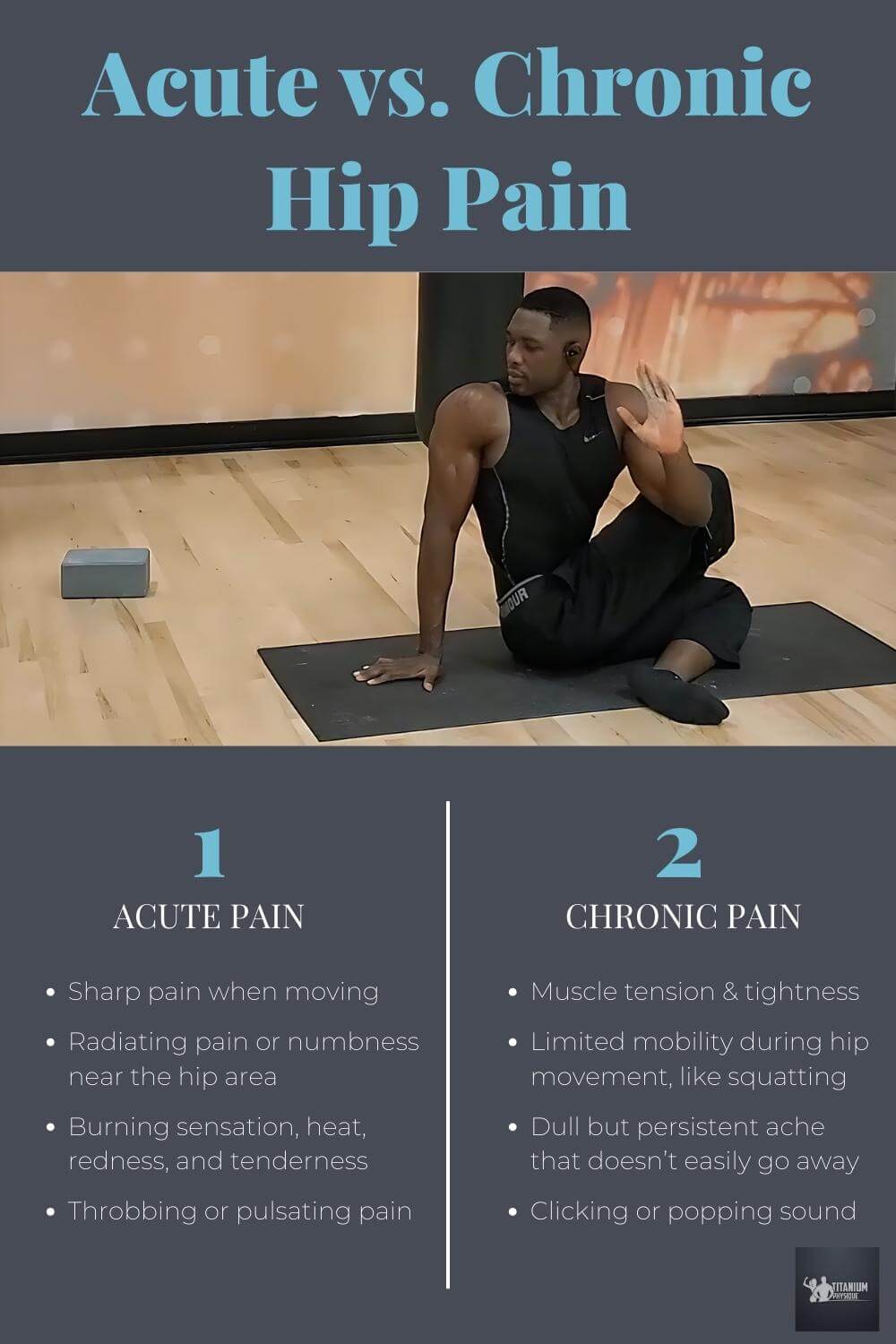
Acute Pain in the Hip Joint, Tendons, and Ligaments
Acute hip pain often results from muscle restriction and repetitive strain, worsened by strenuous physical activities or poor posture. This can lead to injuries such as hip bursitis.
- Hip Bursitis: Hip bursitis occurs when the bursae—small, fluid-filled sacs that cushion the hip joint—become inflamed due to overuse, repetitive motions, or direct impact. Symptoms of hip bursitis include sharp pain on the outer side of the hip, tenderness, swelling, and increased discomfort during movements like climbing stairs or lying on the affected side.
Other symptoms of acute hip pain include:
- Localized Pain: Sharp pain when standing, walking, or moving the hip joint.
- Burning Sensation: A burning feeling around the hip joint.
- Tenderness and Swelling: Sensitivity and inflammation in the affected area.
- Throbbing: Pulsating pain that worsens with movement or pressure.
This type of pain is typically an inflammatory response as the body attempts to repair strained or injured tissues.
Acute inflammation usually lasts for a few days to a few weeks. Rest, proper care, and targeted treatment can help alleviate pain and support healing.
Chronic Pain
Chronic hip pain is characterized by persistent tension, stiffness, and dull aches, often resulting from prolonged restriction in the hip and flexor muscles.
Over time, tight muscles such as the psoas, piriformis, tensor fascia latae, gluteus medius, and hamstrings contribute to discomfort and limited mobility.
- Snapping Hip Syndrome: Snapping hip syndrome occurs when tight or inflamed tendons snap over bony structures in the hip joint during movement. This condition is often caused by restricted hip and flexor muscles, leading to audible popping or clicking sounds, pain, and a feeling of instability in the hip.
Key symptoms of chronic hip pain include:
- Tension: Chronic tightness in the hip joint, often worsened by prolonged sitting, standing, or physical activity.
- Limited Mobility: Difficulty in performing movements like bending, squatting, or rotating the hip.
- Radiating Pain or Numbness: Discomfort that extends to the thigh or groin, sometimes accompanied by tingling sensations.
- Clicking or Popping Sounds: Audible snapping or popping sounds during hip movements, often due to tendon restrictions.
- Dull and Persistent Ache: A constant ache that interferes with daily activities and overall quality of life.
Chronic hip pain develops when muscle restrictions and inflammation persist for three months or more, creating a cycle of discomfort that requires targeted interventions to resolve.
Non-Surgical Treatment and Prevention
Summary of Treatments
- Heat and Cold Therapy: Heat can relax tight hip and flexor muscles, improve blood flow, and reduce stiffness, while cold therapy is ideal for reducing inflammation and numbing acute pain in the hip joint.
- Short-Term Relief Options: Supplements, pain relievers, and tools like kinesiology tape can provide temporary relief but fail to address underlying issues.
- Self-Myofascial Release (SMR) Relief Exercises: SMR exercises can keep hip muscles pliable, releasing restrictions and easing tension in tendons and joints.
Recurring tendon and muscle pain shouldn’t keep interfering with your day.
If hip pain keeps returning, there’s a better way to address it.
Ready to take the next step? I'm ready to fix my hip
Heat and Cold Therapy
Heat Therapy
Heat therapy is highly effective for relaxing tight hip and flexor muscles, improving circulation, and easing stiffness. This method is particularly helpful for managing chronic tension and discomfort in the hip.
How to Apply Heat Therapy:
- Use a heating pad, warm towel, or hot water bottle on the affected area of the hip.
- Apply heat for 15-20 minutes, two to three times daily.
- Avoid direct contact with the skin to prevent irritation.
Heat therapy increases blood flow to the hip muscles, reducing tension and providing relief from ongoing discomfort.
Cold Therapy
Cold therapy is ideal for acute injuries in the hip joint, such as inflammation from repetitive strain or sharp pain after sudden impact. Cold reduces swelling, numbs the area, and provides temporary pain relief.
How to Apply Cold Therapy:
- Use a cold pack or ice wrapped in a towel and place it on the affected hip area.
- Apply for 15-20 minutes, allowing breaks between applications.
- Ensure the cold is not too intense to avoid muscle tightening.
Cold therapy helps reduce inflammation and relieve acute hip pain, making it an essential tool for managing sudden injuries.
Short-Term Options: Pros and Cons
Joint Supplements & Health Vitamins
- Pros: Supplements containing ingredients like glucosamine, chondroitin, and MSM may help improve joint health and reduce mild inflammation in the hip over time. Consistent use can support cartilage and joint function.
- Cons: These supplements often provide minimal relief for chronic hip pain caused by muscle restrictions or tendon issues. They do not address the root cause and may take weeks or months to show noticeable effects. Further, studies have found that MSM and Chondroitin did not significantly reduce chronic joint pain.
Painkillers (NSAIDs)
- Pros: Nonsteroidal anti-inflammatory drugs (NSAIDs) like ibuprofen can quickly reduce inflammation and relieve hip pain, especially during acute flare-ups.
- Cons: Painkillers address symptoms rather than root causes, such as muscle restriction or chronic inflammation. Prolonged NSAID use may lead to gastrointestinal or kidney issues, making them unsuitable for long-term pain management.
Joint Injection (Cortisone Shot)
- Pros: Cortisone injections deliver a powerful anti-inflammatory medication directly into the hip joint, providing significant short-term relief. They can help alleviate pain for several weeks or months.
- Cons: The effects are temporary, and symptoms often return once the medication wears off. Repeated injections can weaken tendons, damage cartilage, or increase the risk of joint infections.
Topical Anti-Inflammatory Remedies (Oil, Cream, Spray, Gel, Poultices)
- Pros: Topical products containing anti-inflammatory ingredients like menthol or MSM can provide localized relief for mild hip pain. They are convenient for targeting specific sore areas.
- Cons: These remedies typically offer short-term relief and may require frequent reapplication. They do not address underlying muscle restrictions or chronic pain causes.
Strength and Physical Therapy
- Pros: Strengthening exercises improve hip stability, mobility, and overall joint health. Physical therapy can also correct posture and movement patterns, reducing the likelihood of future injuries.
- Cons: Without first addressing chronic muscle restriction, physical therapy alone may not be effective. Overly strenuous exercises can exacerbate discomfort if underlying muscle tightness is not resolved.
Manual Therapy (Massage, Cupping, Dry Needling)
- Pros: Techniques like massage, cupping, and dry needling target tight muscles and improve blood flow, reducing tension and providing relief for hip pain. These therapies enhance flexibility and mobility in restricted areas.
- Cons: Multiple sessions (over an extended time) are often required for lasting relief, which can be expensive. Some individuals may find deep-tissue work uncomfortable, and results may vary based on the severity of restrictions.
Vibrating Massagers
- Pros: Vibrating massagers offer a convenient at-home option for relaxing tight hip muscles and alleviating tension, especially after physical activity.
- Cons: Intense vibrations may cause chronically tight muscles to tense further, making them less effective for severe muscle restrictions. Overuse can increase discomfort in sensitive areas.
Kinesiology Tape Therapy
- Pros: Kinesiology tape provides support to overworked hip muscles and joints, reducing strain during movement. It can also improve posture and reduce pain during recovery from injuries.
- Cons: Taping alone does not resolve chronic muscle restrictions or inflammation. Over-reliance on tape may mask symptoms without addressing the root cause, potentially delaying recovery.
Pain Relief Patches
- Pros: Medicated patches with anti-inflammatory properties offer targeted pain relief for sore hip areas. Non-medicated patches can provide soothing warmth or cooling sensations for temporary comfort.
- Cons: Relief from patches is short-lived, and they do not address the root causes of hip pain. Prolonged reliance on patches can delay proper treatment and recovery.
Stretching Therapy
- Pros: Stretching improves flexibility in hip and supporting muscles, reducing tension and enhancing mobility. Regular stretching can help alleviate stiffness and prevent pain recurrence.
- Cons: Stretching alone does not resolve chronic muscle restrictions. Improper techniques or overstretching tight muscles can worsen pain or strain injuries.
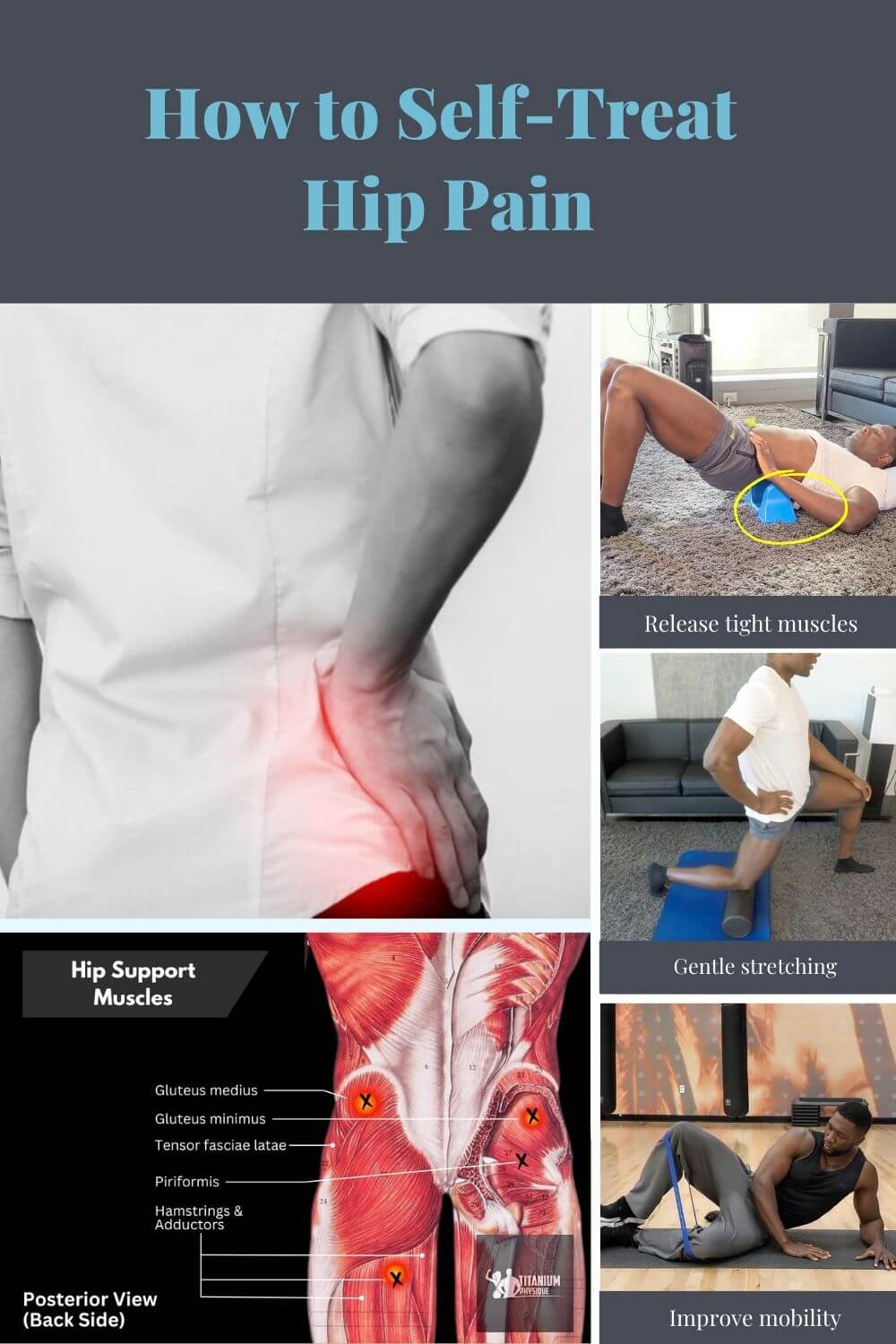
The image below illustrate some of the short-term non-surgical treatment options mentioned earlier.

SMR Exercises for Hip Pain (exercise photos below)
Self-myofascial release (SMR) is an effective technique for relieving chronically tight hip and flexor muscles, reducing strain, enhancing mobility, and improving overall hip function.
By applying targeted pressure to specific points in the fascia—the connective tissue around muscles—SMR encourages restricted muscles to relax, alleviating discomfort and restoring flexibility.
Recommended Tools:
- PSO-Rite: Effective for reaching deeper muscles, such as the psoas.
- Massage Ball: Ideal for targeting the gluteus medius.
- Peanut Ball: Perfect for isolating and massaging the rectus femoris.
- Foam Roller: Works well for releasing the piriformis and tensor fascia latae (TFL).
- Medicine Ball: Great for addressing tight hamstrings and adductors.
These tools are durable, affordable, and offer accessible solutions for ongoing pain management in the hip.
Relief Exercises (Step-by-Step Instructions)
Performing targeted self-myofascial release (SMR) exercises is a highly effective way to relieve hip pain.
These exercises focus on specific muscles prone to restriction, such as the psoas, piriformis, tensor fascia latae, gluteus medius, and hamstrings.
For best results, use a holistic approach and massage the hip flexors and all supporting muscles.
Exercise #1 — Massage the Psoas Muscle
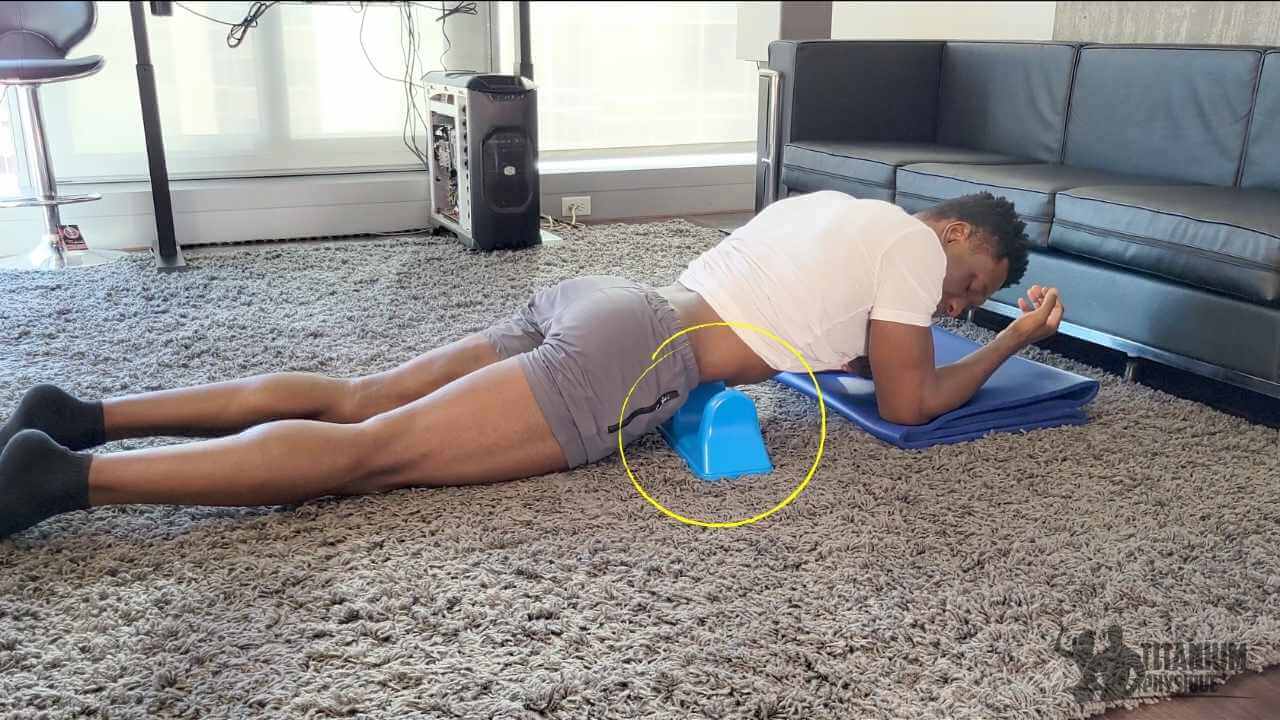
Massage the Psoas Muscle with a PSO-Rite:
- Setup: Lie on your stomach with the PSO-Rite positioned under your psoas muscles, located just above the hip bone and slightly toward the center of your abdomen.
- Apply Pressure: Gently relax your body weight onto the PSO-Rite, allowing it to press into the psoas muscles. Hold this position for 2-3 minutes, breathing deeply to encourage the muscle to release.
- Shift and Adjust: Slowly shift your position slightly to target different points along the psoas. Pay attention to any tight or tender areas and focus on those for longer holds.
- Target Trigger Points: Pause and hold pressure on areas where you feel significant tightness or tenderness, allowing the muscles to relax. The "X" shown in the image below marks the common locations where tension and trigger points typically develop in the psoas muscle.
- Routine: Perform this exercise once a day to relieve tension in the psoas. For faster results, increase to twice a day, in the morning and evening.
In the photo below, I demonstrate how to massage the psoas muscles using a PSO-Rite.

Exercise #2 — Massage the Gluteus Medius
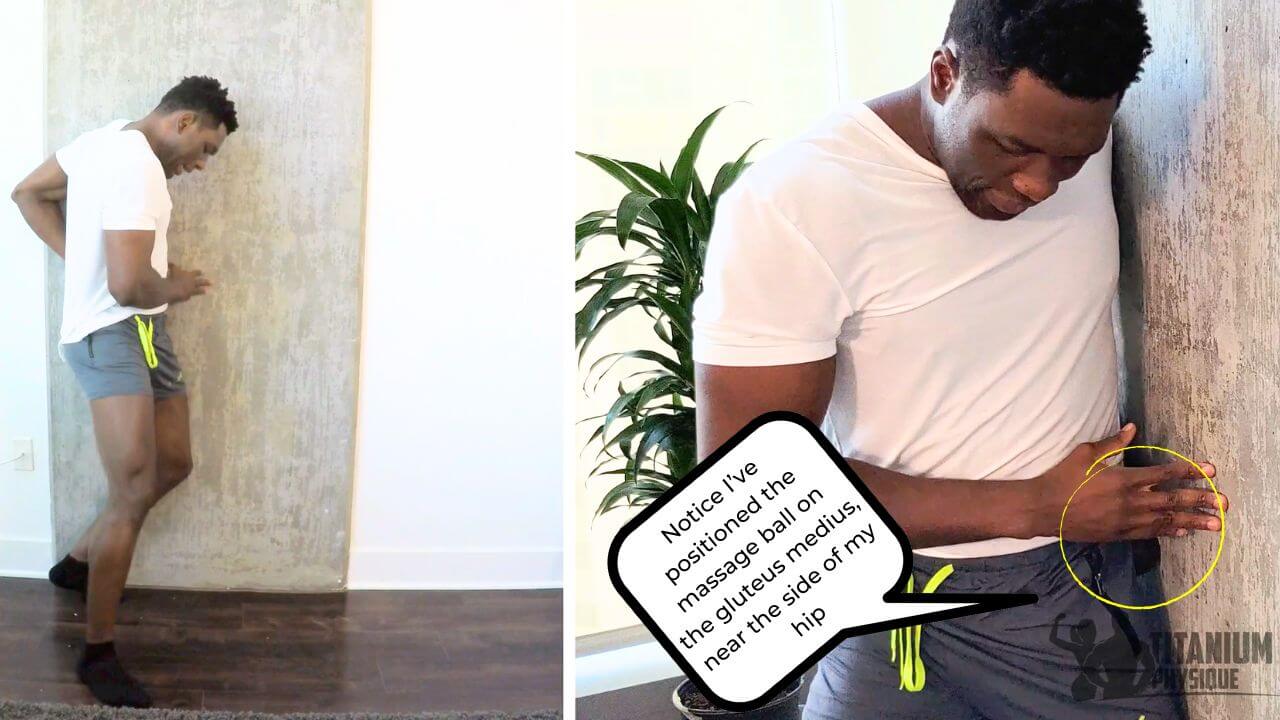
Massage the Gluteus Medius with a Massage Ball:
- Setup: Stand with your back against a wall and place a massage ball between the wall and the gluteus medius, located on the upper outer part of your buttock.
- Apply Pressure: Lean into the ball, allowing it to press into the gluteus medius. Hold this position for 2-3 minutes, breathing deeply to encourage the muscle to relax.
- Move Slowly: Shift your body slightly to target different points in the gluteus medius. Focus on tight or tender areas, using slow, controlled movements to apply pressure.
- Target Trigger Points: Pause and hold pressure on any areas where you feel significant tightness or tenderness, allowing the muscles to release. The "X" shown in the image below marks the common locations where tension and trigger points typically develop in the gluteus medius.
- Routine: Perform this exercise once a day to relieve tension in the gluteus medius. For faster results, increase to twice a day, morning and evening.
In the photo below, I demonstrate how to massage the gluteus medius using a massage ball.

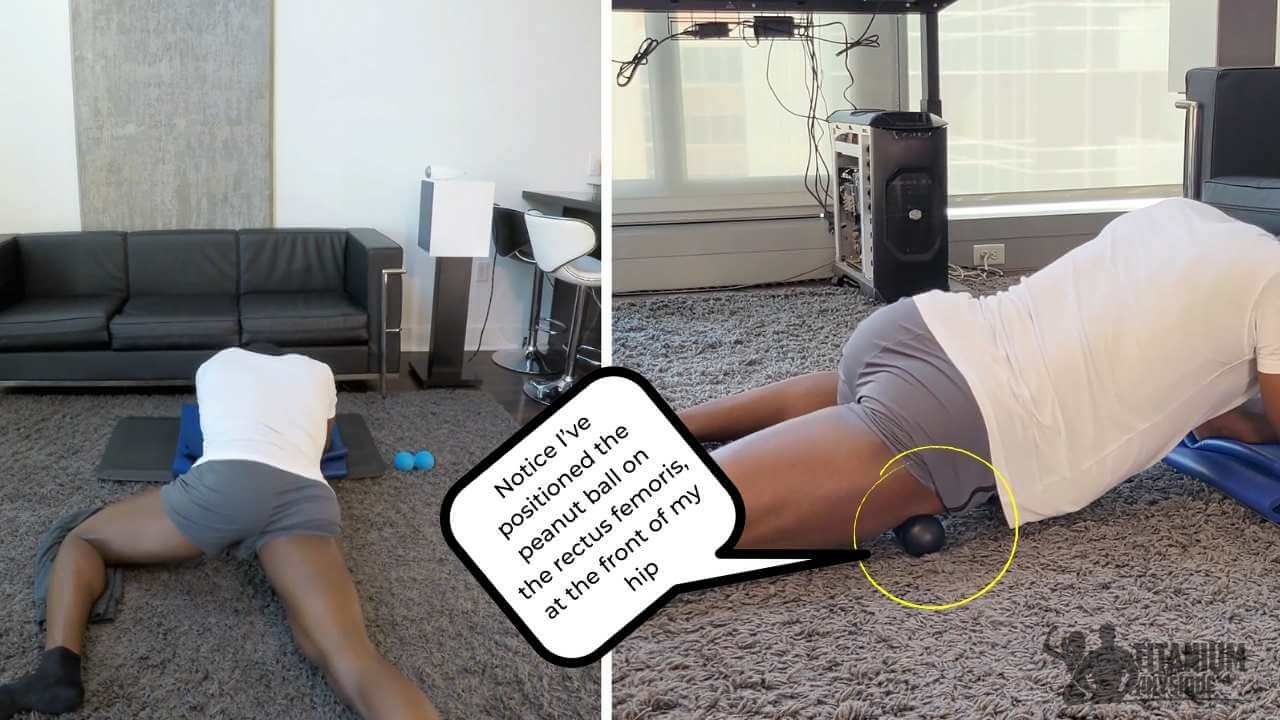
Exercise #3 — Massage the Rectus Femoris
Massage the Rectus Femoris with a Peanut Ball:
- Setup: Lie on your stomach and position the peanut ball under the rectus femoris, just in front of your thigh near the hip area.
- Apply Pressure: Use your elbows to support your upper body and gently press your weight onto the peanut ball.
- Roll Slowly: Move back and forth over the muscle, targeting the length of the rectus femoris from the hip area to the mid-thigh.
- Target Trigger Points: Pause on tight or tender areas, applying steady pressure to encourage the muscle to release. The "X" shown in the image below marks the common locations where tension and trigger points typically develop in the rectus femoris.
- Routine: Perform this exercise once daily. For faster results, repeat twice daily, morning and evening.
In the photo below, I demonstrate how to massage the rectus femoris using a peanut ball.

Exercise #4 — Massage the Piriformis
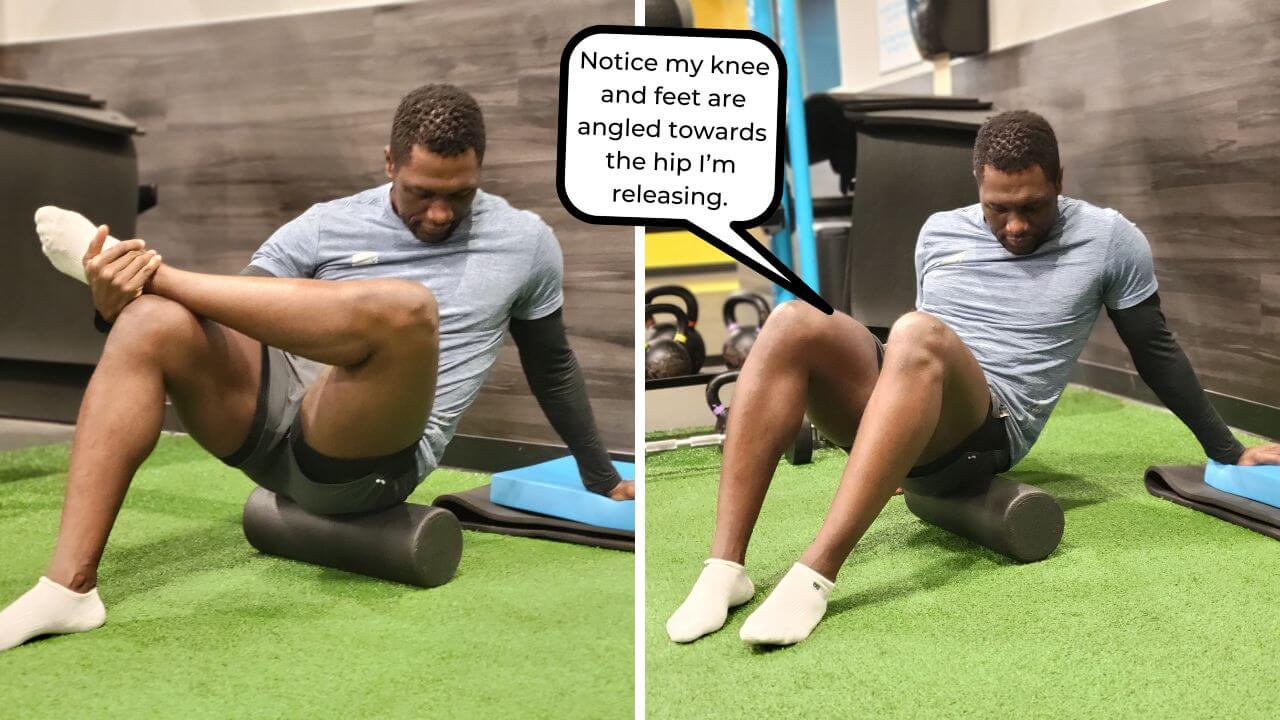
Massage the Piriformis with a Foam Roller:
- Setup: Sit on a foam roller with one leg crossed over the opposite knee, creating a figure-four position. The piriformis muscle is located deep in the buttock, just beneath the gluteus maximus.
- Apply Pressure: Shift your weight slightly onto the side with the crossed leg, positioning the foam roller under the piriformis.
- Roll Slowly: Move back and forth over the muscle, applying controlled pressure. Focus on the area just above the hip bone where the piriformis attaches to the sacrum.
- Target Trigger Points: Pause on tight or tender areas, applying steady pressure to encourage the muscle to release. The "X" shown in the image below marks the common locations where tension and trigger points typically develop in the piriformis.
- Routine: Perform this exercise once daily. For faster results, repeat twice daily, morning and evening.
In the photo below, I demonstrate how to massage the piriformis using a foam roller.

Exercise #5 — Massage the Tensor Fasciae Latae (TFL)
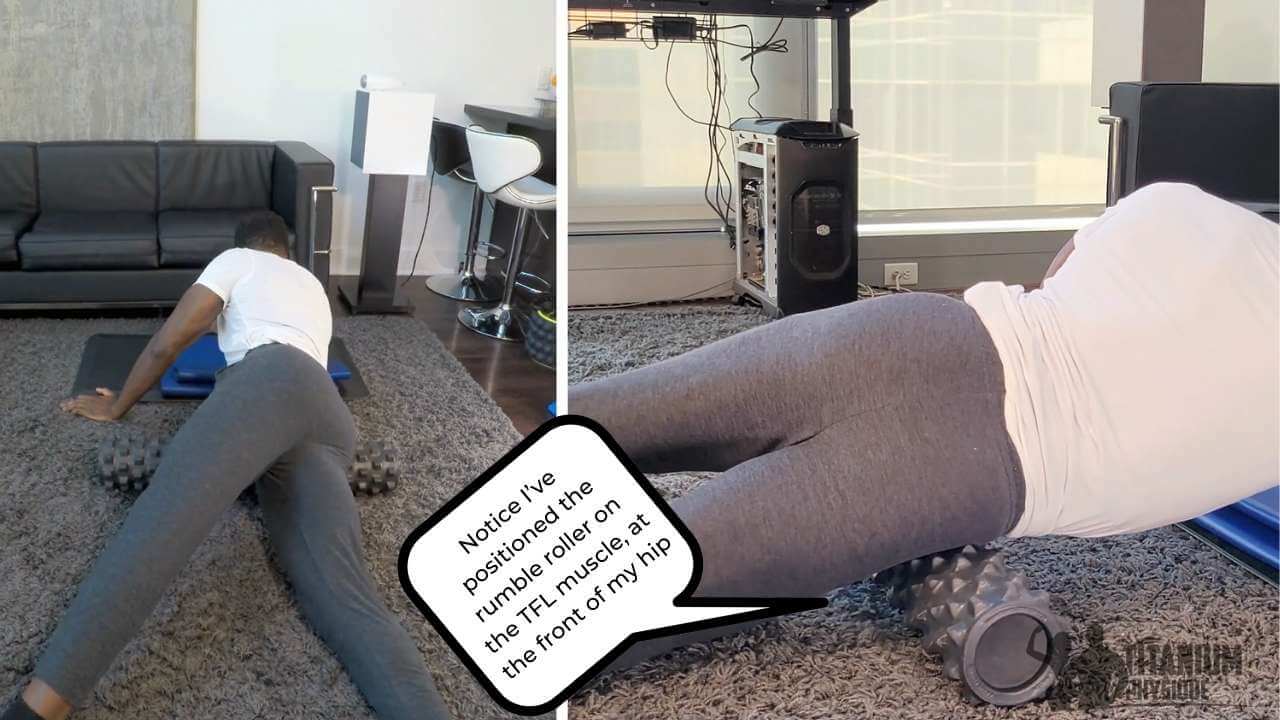
Massage the Tensor Fasciae Latae with a Foam Roller or Rumble Roller:
- Setup: Lie on your stomach with the foam roller or rumble roller positioned under the TFL, located on the front outer side of your hip near the top of the thigh.
- Apply Pressure: Gently relax your body weight onto the roller, allowing it to press into the TFL.
- Roll Slowly: Move back and forth over the TFL, applying steady, controlled pressure. Focus on the area where the muscle connects to the IT band and the front hip.
- Target Trigger Points: Pause on tight or tender areas, applying firm pressure to release tension. The "X" shown in the image below marks the common locations where tension and trigger points typically develop in the TFL.
- Routine: Perform this exercise once daily. For faster results, repeat twice daily, morning and evening.
In the photo below, I demonstrate how to massage the TFL using a foam roller.

Exercise #6 — Massage the Hamstrings and Adductors
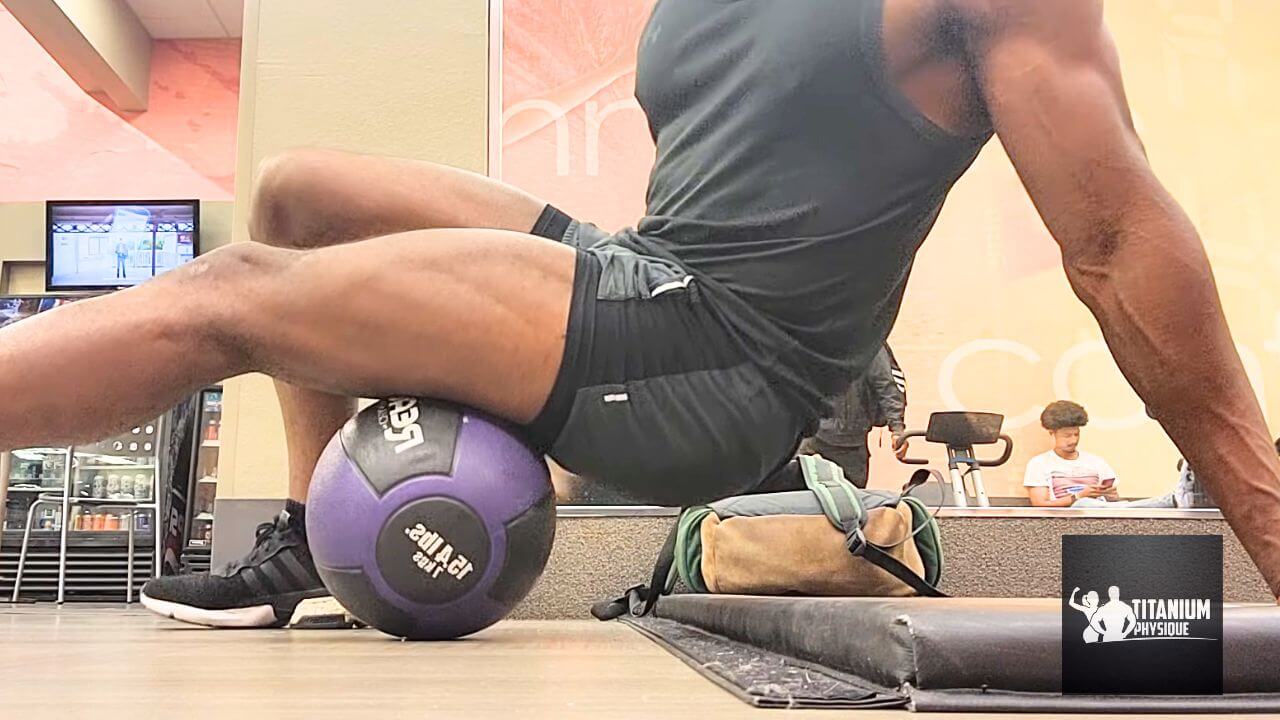
Massage the Hamstrings and Adductors with a Medicine Ball:
- Setup: Sit on the floor with the medicine ball positioned under your hamstring, starting near the sit bone (ischial tuberosity). Adjust the position to target either the inner thigh (adductors) or the back of the thigh (hamstrings).
- Apply Pressure: Use your hands to support your body weight and press your leg gently into the medicine ball.
- Roll Slowly: Move the ball along the length of the muscle, focusing on the hamstrings from the sit bone to just above the knee or on the adductors along the inner thigh.
- Target Trigger Points: Pause on tight or tender areas, applying steady pressure to release the tension. The "X" shown in the image below marks the common locations where tension and trigger points typically develop in the hamstrings and adductors.
- Routine: Perform this exercise once daily. For faster results, repeat twice daily, morning and evening.
In the photo below, I demonstrate how to massage the hamstrings and adductors using a medicine ball.

Ready to take the next step?
Our hip pain program is designed to help eliminate pain, so daily activities no longer feel limited.
Resources
- Hip Problems: https://www.hopkinsmedicine.org/health/conditions-and-diseases/hip-problems
- Hip pain: https://medlineplus.gov/ency/article/003179.htm
- The Magnesium Miracle (Second Edition) - Discover the Missing Link to Total Health, By Carolyn Dean, MD, ND: https://www.google.com/books/edition/The_Magnesium_Miracle_Second_Edition/2lBcDAAAQBAJ
- Calcification: https://medlineplus.gov/ency/article/002321.htm
- Genetics of Muscle Stiffness, Muscle Elasticity and Explosive Strength: https://www.ncbi.nlm.nih.gov/pmc/articles/PMC7706646/
- What Is the Evidence for Rest, Ice, Compression, and Elevation Therapy in the Treatment of Ankle Sprains in Adults: https://www.ncbi.nlm.nih.gov/pmc/articles/PMC3396304/
- Combined Treatment With Chondroitin Sulfate and Glucosamine Sulfate Shows No Superiority Over Placebo for Reduction of Joint Pain and Functional Impairment in Patients With Knee Osteoarthritis: A Six‐Month Multicenter, Randomized, Double‐Blind, Placebo‐Controlled Clinical Trial: https://acrjournals.onlinelibrary.wiley.com/doi/epdf/10.1002/art.39819
- Recognizing the Risks of Chronic Nonsteroidal Anti-Inflammatory Drug Use in Older Adults: https://www.ncbi.nlm.nih.gov/pmc/articles/PMC3158445/
- What You Should Know About Cortisone Shots: https://www.hss.edu/conditions_cortisone-shots.asp#shot-duration
- THE EFFECTS OF SELF‐MYOFASCIAL RELEASE USING A FOAM ROLL OR ROLLER MASSAGER ON JOINT RANGE OF MOTION, MUSCLE RECOVERY, AND PERFORMANCE: A SYSTEMATIC REVIEW: https://www.ncbi.nlm.nih.gov/pmc/articles/PMC4637917/
- Efficacy and Safety of Magnesium for the Management of Chronic Pain in Adults: A Systematic Review: https://journals.lww.com/anesthesia-analgesia/fulltext/2020/09000/efficacy_and_safety_of_magnesium_for_the.20.aspx
Contact About Privacy Terms | Copyright © 2026 TitaniumPhysique LLC.
Disclaimer: (1) Fitness results vary by individual effort, as such, individual results may vary; (2) We use Microsoft Clarity on our website to ensure you have the best possible browsing experience. Our privacy policy has more details.