
Elbow Pain from Weightlifting (A Helpful Guide for Lifters)
Written by: Nurudeen Tijani (Wellness and Pain Relief Fitness Coach)
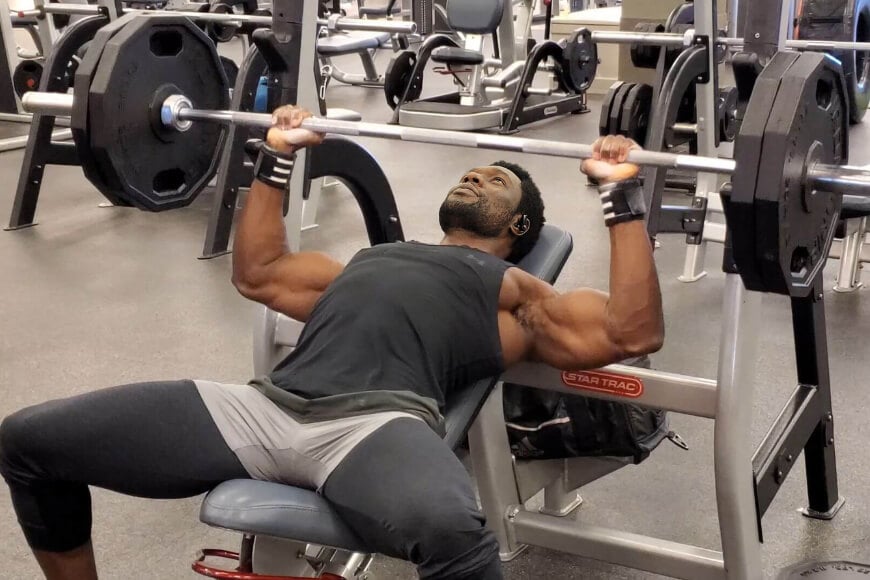
Quick Answers to Your Questions
- Why does my elbow hurt when lifting? — Pressing, pulling, or gripping movements involved in lifting can trigger tendon irritation such as triceps tendonitis, tennis elbow, and golfer’s elbow, leading to discomfort during training.
- Why is this happening? — These issues develop because restricted (stiff or tight) muscles overload and strain the elbow tendons during repeated lifting movements.
- Why does the pain keep returning? — The pain often returns because most treatments do not change how muscle tissue stress is handled during lifting. When muscles remain stiff or restricted, the elbow tendons continue to absorb more stress than they should, and the pain comes back once normal lifting resumes.
- How do I resolve it? — Resolving this issue requires improving muscle pliability and reducing tendon irritation to restore how stress is handled during lifting, rather than avoiding lifts or treating the elbow alone.
Eliminate Elbow Pain — Without Guesswork
Our step-by-step program is designed to eliminate elbow pain fast. Ready to get started?
How the Elbow Works (And Why This Matters)
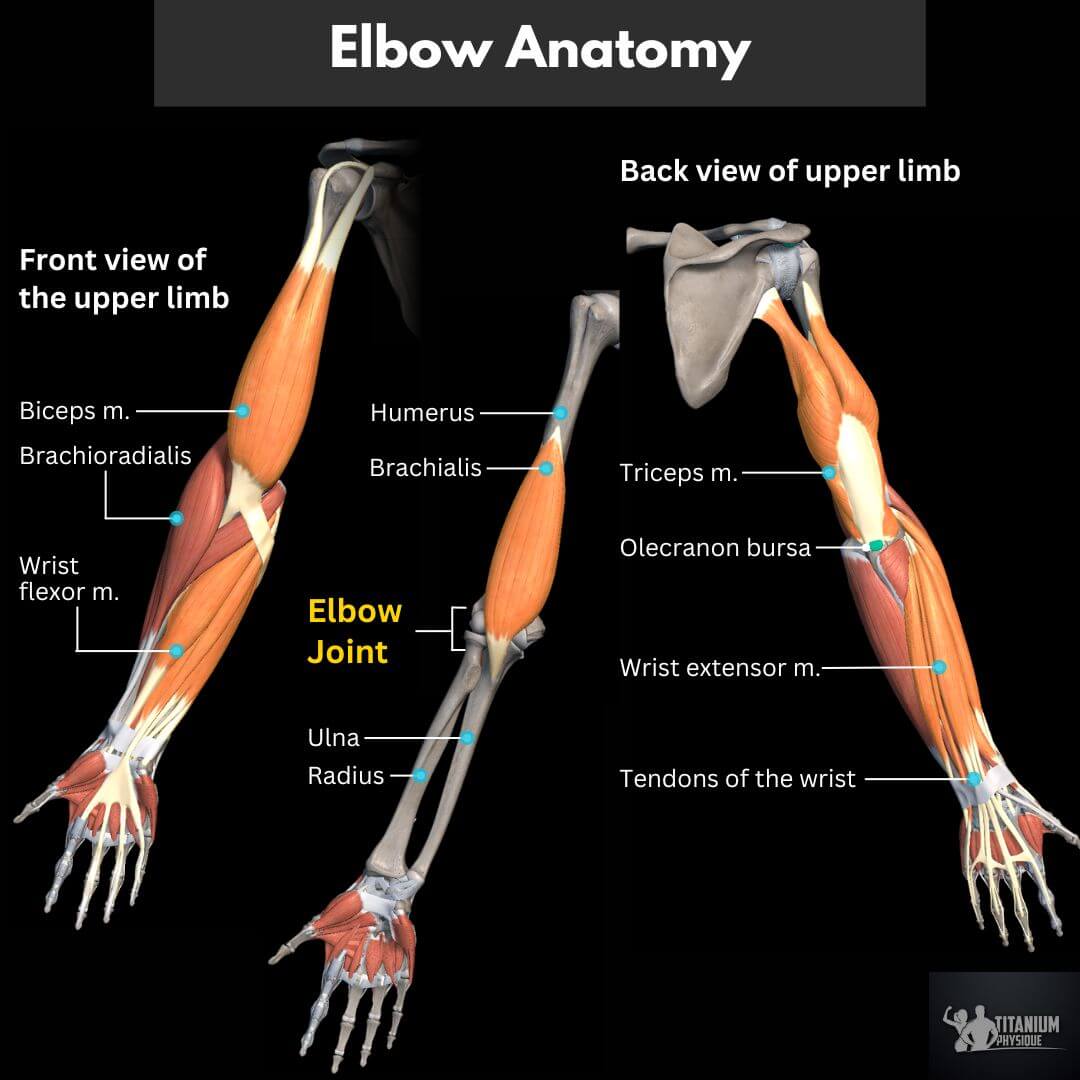
The elbow is a hinge joint where the upper arm and forearm come together, supported by tendons, ligaments, muscles, and cushioning tissue that all work together during lifting and gripping.
The forearm, biceps, and triceps generate force, while tendons and joint structures transfer that force through the elbow to control bending, straightening, and load absorption.
When these tissues become stiff, overworked, or irritated, stress no longer spreads evenly through the arm.
A basic understanding of how the elbow and surrounding muscles function helps explain why pain develops—and why improving tissue pliability is key.
With this context in mind, the root causes explained later in this article will make much more sense.
Jump to a specific section of the article:
Causes
Root Causes of Elbow Pain
- Magnesium deficiency: Magnesium dissolves calcium and prevents the calcification of soft tissues, which can harden tendons and cause pain. Magnesium deficiency leads to muscle tension, joint inflammation, and tendonitis by allowing excess calcium to keep muscles tense. "The Magnesium Miracle" by Carolyn Dean, MD, ND, highlights that a significant portion of the population is deficient in this essential mineral.
- Muscle restriction: Restrictions occurs when inelastic fibers shorten and cannot relax to their normal state. Lifting, pulling, or pushing heavy objects can overstretch and overload the triceps and forearm muscles, leading to restriction. This restriction is the trigger that initiates pain in the tendon, leading to inflammation and discomfort.
- Chronic inflammation: Physical activity helps build and strengthen muscles but can also lead to inflammation in tendons, ligaments, and joints. If the body's healing process fails, chronic inflammation can occur, which prevents proper healing of muscles, tendons, and ligaments, leading to chronic tendonitis.
For a full explanation of these causes, visit: Elbow Tendonitis: Causes and Relief Exercises.
Overuse and General Causes of Elbow Pain
Weightlifter's elbow is an overuse injury. It results from repetitive movements with restricted muscles.
Muscle restriction includes conditions like tightness, tension, tenderness, shortening, inelasticity, knots, and dehydration of the tissues.
Overuse injuries can develop gradually over time (chronic) or occur suddenly (acute). Additional factors that contribute to this condition include:
- Insufficient warm-up
- Inadequate stretching
- Poor weight lifting form
- Excessive resistance or weights
- Overtraining
- Inadequate recovery
- Lack of myofascial release
Tendon Injuries That Cause Elbow Pain
Tennis elbow and triceps tendonitis are often associated with a lifter's elbow.
However, they are not the only cause. The following tendon injuries can also contribute to pain. They are listed from most to least common.
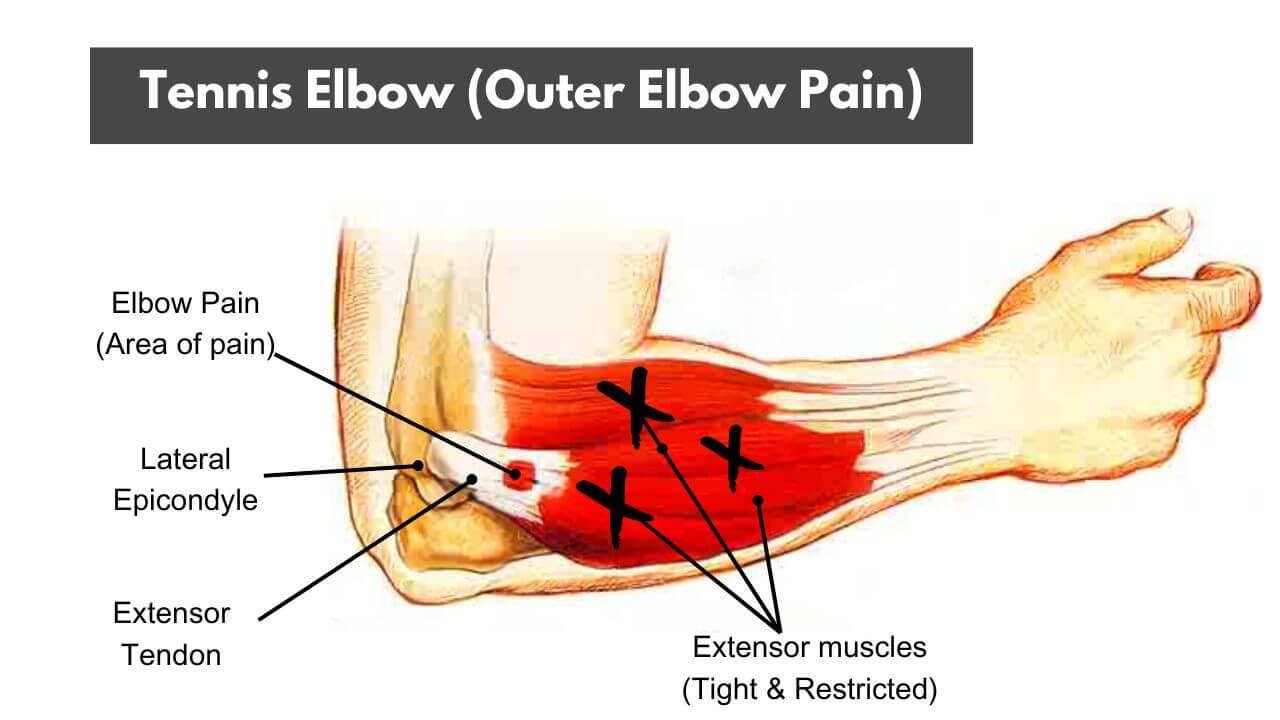
Tennis Elbow (Pain Outside the Elbow)
Tennis elbow or lateral epicondylitis is a form of tendonitis that causes discomfort at the outer part of the elbow due to inflammation of the common extensor tendon. It results from repetitive wrist extension during "press" or "push" activities such as bench presses or push-ups. According to the National Health Service, this condition is the most common cause of discomfort in the arm joint.
Triceps Tendonitis (Pain at the Back of the Elbow)
Triceps tendonitis is inflammation of the triceps tendon, resulting in pain at the back of the arm joint. This condition is common among lifters and athletes because of the repetitive strain on the connective tissue during "push" or "press" weightlifting movements.
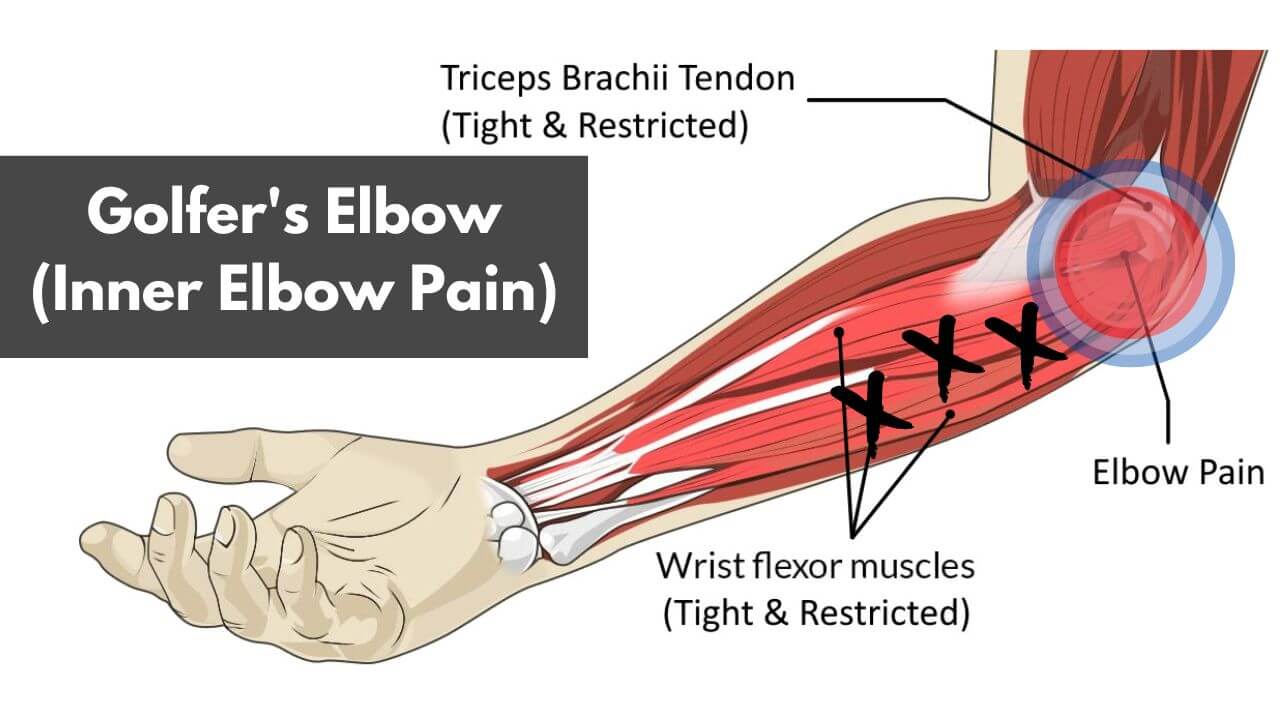
Golfer's Elbow (Pain Inside the Elbow)
Golfer's elbow or medial epicondylitis is another type of tendonitis that causes pain at the inside part of the arm joint due to inflammation of the medial elbow tendon. It results from repetitive wrist flexion during "pull" activities such as chin-ups, bicep curls, rows, and lat pulldowns.
Elbow Bursitis
Elbow or olecranon bursitis is the inflammation of the bursa, a small fluid-filled sac that cushions the joint. This condition often results in swelling, tenderness, and pain at the back of the elbow. Athletes, weight lifters, and gym-goers who frequently engage in intense workouts, heavy lifting, or placing the elbow tip on hard surfaces are more prone to developing this condition.
Distal Bicep Tendonitis
Distal biceps tendonitis is inflammation of the connective tissue that attaches the biceps muscle to the radius (forearm bone) just below the elbow. This condition causes pain in the lower biceps at the front crease of the arm joint, primarily during elbow flexion and forearm rotation. Lifters experience discomfort during activities that involve heavy pulling or lifting motions, such as bicep curls and rows.
Brachialis Tendonitis
Brachialis tendonitis is inflammation or irritation of the brachialis tendon, which connects the upper arm bone (humerus) to the forearm bone (ulna). An injured or restricted brachialis can cause pain, weakness, instability, and swelling on the inside part/front elbow crease. According to the National Institutes of Health, this condition is rare.
Lifting Mechanics That Contribute to Elbow Pain
This section explains general factors, including lifting mechanics, that cause pain and affect the elbow.
Keep in mind: although the mechanics and factors below are unique, for most people, the underlying issue remains the same: restricted muscles.
When muscles are pliable, these issues are less problematic.
- Overly Extended Wrists: Occurs when the wrists are bent too far backward, causing strain on the wrist flexors and connective tissues at the inner elbow.
- Overload of the Wrist Flexors and Extensors: Excessive load on these muscles can lead to discomfort and inflammation at the outer part of the elbow.
- Overstretching of the Triceps: During lifting movements that bend the arm, inelastic triceps can cause discomfort at the back of the arm joint due to excessive stretching.
- Weight Load and Joint Compensation: Lifting too heavy without proper progression or compensatory movements due to weak or tight muscles can place additional stress on the elbows.
- Type of Grip: The grip used (overhand, underhand, narrow, wide) can affect where tension occurs in the elbow.
- Type of Equipment Used: Different equipment (dumbbells, barbells, machines) can contribute to varying strains on the elbow. Dumbbells and barbells exert the most tension.
Exercises That Trigger Elbow Pain
If you experience elbow pain during a specific exercise and would like to learn about the exercise mechanics that lead to pain, follow the respective links below:
Bench Press:
- Elbow pain during bench press can result from improper hand placement: wide grip straining the forearms; a close grip increasing pressure on the inner tendons; improper bar path that misaligns the joints. Read more
Bicep Curl:
- Grip width during bicep curls affects elbow strain—a wide grip can stress the outer tendons, while a close grip increases pressure on the inner tendons, potentially leading to tennis or golfer’s elbow. Read more
Chest Flys:
- Dumbbells require control to prevent uneven strain, cables offer a smoother motion with less joint stress, resistance bands provide consistent tension but can overload tight muscles, and machines offer support but may still cause strain if set up incorrectly. Read more
Deadlift:
- Conventional and sumo deadlifts can stress the elbows due to grip mechanics, while Romanian deadlifts reduce strain with lighter loads, and trap bar deadlifts offer a more elbow-friendly neutral grip. Read more
Lat Pulldown:
- Cable and machine pulldowns offer stability but require proper form, resistance bands can cause irritation if over-tensioned, and one-arm or kneeling pulldowns may increase imbalance if not controlled. Read more
Overhead Press (shoulder press):
- Overhead press variations impact elbow stress based on stability and complexity. Standing and seated presses can overload the elbows, while machines provide stability but may increase joint pressure. Read more
Pull-ups (or chin-ups):
- The thickness of a pull-up bar affects grip stability and joint strain—thick bars can cause forearm tension and wrist discomfort, while thin bars may lead to instability and elbow tendon overexertion. Read more
Push-ups:
- Push-ups variation and hand placement affects tendon stress: wide push-ups strain the outer elbows, while narrow (diamond) push-ups put more pressure on the triceps and inner elbows. Read more
Row Exercises (upright row, seated or bent-over rows):
- Grip type affects forearm and elbow strain during row exercises. An overhand grip stresses the extensors, while an underhand grip can overstretch the forearm flexors and biceps tendons. A neutral grip reduces stress by maintaining natural wrist and forearm alignment. Read more
Skull Crushers:
- The degree to which you bend your elbows during skull crushers can significantly influence tendon tension and overall comfort. Excessive bending during the lowering phase can overstretch the triceps and place unnecessary stress on the tendons at the back of the elbow. Read more
Squats:
- Front squats are generally easier on the elbows than back squats. However, the elbow bend needed to stabilize the bar can overstretch tight triceps, causing discomfort. Read more
Triceps Exercises (triceps extension, dips, pushdown, kickback):
- Using an EZ bar for triceps exercises, such as lying triceps extensions, allows for a more ergonomic grip that reduces strain on the elbows. Read more
The images below illustrate common elbow injuries. The "X" indicated in the images are where trigger points or irritation in the tissue tend to occur.
Trigger points, known as muscle knots, are small, hyperirritable spots within a muscle. They cause tenderness and discomfort and can develop due to muscle overuse or injury.

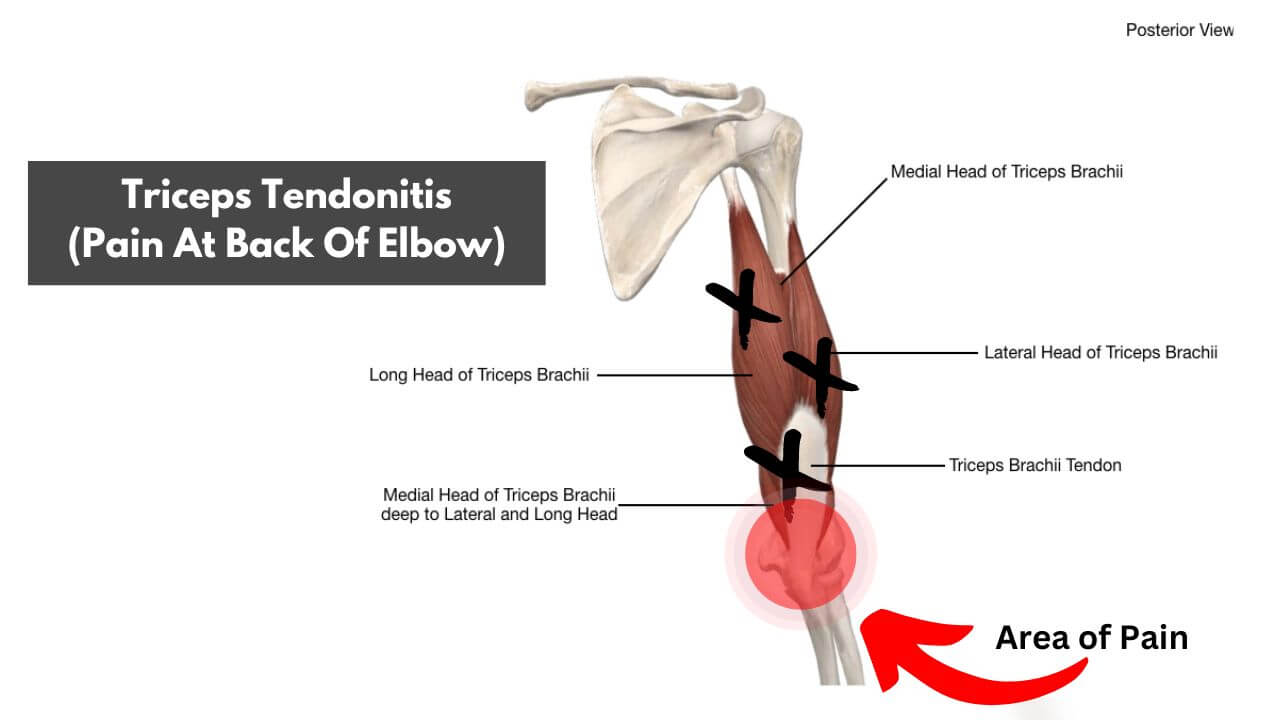
Symptoms
Here are the symptoms you might experience during or after working out:
- A burning sensation at the tip of the elbow
- Pain inside, outside, or at the back part of the arm joint.
- Tenderness, swelling, and soreness.
- Sharp (shooting and sudden) or dull aches.
- Difficulty bending and straightening the arm due to tightness and stiffness in the arm joint (you might feel this when taking off your shirt after an elbow-intensive workout).
- Weak grip strength.
- Discomfort when gripping objects, such as barbells, dumbbells, exercise bars, or equipment.
- Increased discomfort when applying pressure to the affected area.
- Pain that worsens with repetitive movements.
Non-Surgical Treatment and Prevention
To resolve and prevent elbow pain from lifting, there are two options:
- Short-term relief methods: painkillers, remedies, and therapies
- Address the root cause to resolve and prevent its recurrence
Addressing the Root Cause
Self-myofascial release (SMR) exercises address the underlying cause of elbow tendonitis. This method helped me resolve my chronic elbow injuries. When performed correctly with the right tools, SMR can provide reliable relief.
In my 10+ years of bodybuilding, I've found this to be the most effective way to self-treat and prevent elbow tendon issues.
The TitaniumPhysique Program provides guided self-treatment routines that target and address the root cause.
Ready to get started? I’m ready to fix my elbow
Short-Term Relief Methods (Pros and Cons)
Conventional pain relief methods provide temporary symptom relief but can not resolve the underlying causes.
As a result, the injury returns when most gym-goers resume working out.
Below are their pros and cons. FYI, I've tried all of these except joint injections.
- Joint Supplements & Health Vitamins: Provide short-term relief but do not resolve the root causes of the injury.
- Painkillers (NSAIDs): Temporarily reduce inflammation and joint aches but only address symptoms and may cause long-term health issues.
- Joint Injection (Cortisone Shot): Offers temporary relief but may lead to long-term side effects and does not address root causes.
- Topical Anti-Inflammatory Remedies: Effective for alleviating acute pain but not chronic injuries.
- Strength Therapy & Physical Therapy: Important for tendinosis recovery but may be ineffective without addressing underlying issues like inflammation and muscle restriction.
- Manual Therapy (Massage, Dry Needling, Cupping): Effective in providing short-to-medium term relief but not a sustainable long-term solution due to high cost.
- Compression Sleeves, Straps, and Brace: Provide temporary relief but don't address the root cause; they also mask injuries and can lead to prolonged symptoms.
- Sports & Kinesiology Tape Therapy: Temporarily relieves muscle and joint discomfort but may mask symptoms and prolong the injury.
- Pain Relief Patches: Offer short-term relief but don't address root causes; may have long-term side effects.
- Stretching Therapy: Stretching is essential for healing and preventing injuries but is ineffective without addressing underlying issues like muscle restriction.
- Heat Therapy: Helps to relieve muscle tension and can improve blood flow to the elbow area, which can promote healing.
Frequently Asked Questions
Why do I suddenly experience pain without an apparent cause?
The muscle conditions that lead to pain develop gradually and cumulatively. Over time, the repetitive use of the biceps, triceps, and forearms can lead to restriction, causing them to become shortened and inelastic.
This process of muscle restriction can take months or even years to develop.
When these tissues are chronically restricted, everyday activities at the gym, picking up weights, and gripping exercise bars or dumbbells during a workout can unexpectedly trigger pain without an apparent cause.
Unfortunately, most people are often unaware of the restricted state of these muscles until they experience a sudden onset of discomfort during physical activities. This point is one of the biggest takeaway from this article.
When someone mentions elbow or forearm pain from lifting, I guide them through this pliability test to help pinpoint the true cause.
What happens if tennis or golfer's elbow is left untreated?
- Worsening of the Pain: The initial discomfort can progress into more severe and persistent pain, making everyday activities challenging and affecting your ability to lift effectively.
- Chronic Inflammation: The inflammation in the elbow tendons may become chronic, leading to a condition known as tendinosis, which involves degeneration of the tendon collagen and can cause long-term problems.
- Arthritis of the Elbow: Untreated pain in the arm can contribute to autoimmune conditions like elbow arthritis.
- Reduced Range of Motion: Neglecting these injuries may lead to stiffness and reduced range of motion in the affected arm, hindering your ability to work out or perform daily tasks.
- Tendon Rupture: In severe cases, continued stress on the already injured tendons could lead to a partial or complete tear, requiring more extensive medical treatment and a longer recovery.
- Compromised Training Progress: Persisting pain may force you to avoid some exercises or reduce the intensity of your workouts.
- Wrist Issues: When restricted wrist extensors and flexors are left untreated, they become dysfunctional and affect connected joints.
Can I still lift weights or work out?
It depends on the severity of the pain and injury. If it's mild, you can use conventional relief medicine or short-term remedies such as sports or kinesiology tape, compression sleeves, braces, or straps to reduce discomfort from lifting. However, if it's chronic, severe, or causes sharp aches, address the underlying cause before resuming working out.
Which exercise variation is better to avoid elbow injuries?
All variations can trigger or worsen an injury; however, resistance bands or cable machine variations are better. Here is a list of variations ranked from best to worst in terms of preventing injuries:
- Resistance band
- Cable machine
- Stationary machines
- Dumbbell
- Smith machine
- Barbell
Here are the reasons why:
- Resistance Band: Provides constant tension in the muscle throughout the entire range of motion, reducing the risk of injury compared to heavy dumbbells or a cable machine. It allows you to modify the arm position, reducing pressure on the elbow.
- Cable Machine: Enables arm isolation and less weight on one arm if needed, which helps prevent discomfort. You can adjust the exercise by increasing weights in smaller increments and varying the speed of reps.
- Dumbbell and Barbell: Dumbbells are preferable to barbells because they isolate the arm and promote a natural range of motion, requiring lighter weights. On the other hand, barbells enable heavier lifting, potentially overloading the joint.
- Stationary Exercise and Smith Machine: These variations provide guided and controlled motion, reducing strain on the elbow. The fixed movement pattern promotes proper form and minimizes unnecessary stress on the arm, making them suitable options for individuals experiencing pain.
While specific variations of exercises can worsen pain more than others, remember that the issue is not the type of equipment or exercise. The root cause is usually inelastic muscles.
What exercise should I avoid with tennis or golfer's elbow?
For tennis elbow, avoid "pressing" or "push" exercises. They can place excessive load on the forearm extensors. Here's a list of 10 exercises to avoid:
- Bench Press
- Shoulder and Overhead Press
- Push-Ups
- Pull-Ups
- Tricep Dips
- Tricep Pressdown
- Reverse and Hammer Curls
- Heavy Upright Rows
- Lat Pulldowns (overhand grip)
- Overhead Tricep Extensions
For golfer's elbow, avoid "pull" exercises. They can place excessive load on the wrist flexors. Here's a list of 10 exercises to avoid:
- Chin-Ups
- Chest Flys (machine, dumbbell, cable)
- Bicep Curls
- Triceps Pushdowns
- Triceps Extensions
- Bar Dips/Chair Dips
- Close Grip Lat Pulldown
- Cable Rows
- Skull Crushers
- Close-Grip Bench Press
Will the injury and pain go away by itself?
Yes, the acute symptoms of the condition can go away with rest. According to the Cleveland Clinic, recovery can take six to 18 months.
However, the underlying factors contributing to the condition, such as muscle restriction, do not resolve themselves. For many weight lifters, it often worsens over time.
Here's why: the root causes of this tendonitis injury include chronic inflammation, magnesium deficiency, and muscle restriction.
- Firstly, once a muscle becomes restricted and dysfunctional, it tends to remain in that state or worsen unless specifically addressed.
- Secondly, muscle dysfunction is often associated with magnesium deficiency. "The Magnesium Miracle," a scientific reference on the health effects of magnesium, highlights that around 40% of magnesium in the body is in the muscles. A significant portion of the population is magnesium deficient. Heavy weight lifting and various factors like caffeine, stimulants, diuretics, stress, and dehydration can deplete magnesium levels in athletes. These factors are one reason why restrictions persist and worsen.
- Thirdly, chronically tight tissues eventually become dysfunctional and stop working correctly. This condition leads to repeated injury that affects other joints and stress on connective tissues, resulting in chronic tendonitis (i.e., chronic lifter's elbow).
How long does it take to resolve tennis or golfer's elbow?
By combining post-workout cold therapy (to relieve burning pain), magnesium supplementation (to reduce inflammation), and self-myofascial release (to alleviate sharp or dull muscle pain), it is possible to resolve these injuries within 7-10 days.
This process involves performing self-myofascial release (SMR) on the biceps, triceps, and forearms at least 2 to 3 times daily.
Remember that while resting (i.e., taking a break from working out) may provide relief, it will not address the root cause of the injury.
How can I prevent injuries and protect my elbows?
The best thing you can do to prevent overuse injuries and protect your elbow is to include self-myofascial release into your recovery routine.
Here are additional tips:
- Listen to your body. If you experience pain while lifting, don't ignore it.
- Stretch and warm up properly before exercising.
- Gradually increase resistance during your workouts.
- Consider assisted variations of exercises that provide additional support to prevent strain.
- Choose exercises that allow a neutral grip (palms facing in).
- If you're training while recovering from an injury, performing partial reps, where you don't fully bend or extend the arm, can help.
- Utilize lifting straps to reduce grip tension in the forearms.
- Supplement with magnesium. It helps to relax tense muscles.
- Incorporate sauna therapy.
- Use a soft pad or cushion if your workout (e.g., yoga), hobbies, or profession requires placing your elbow on hard surfaces.
- Incorporate forearm and wrist strengthening exercises to improve overall tendon resilience.
For the complete list with explanations, here are my best tips for keeping your elbows healthy.
How can I resolve and prevent elbow pain?
To resolve and prevent discomfort, maintain pliable biceps, triceps, and forearms through self-myofascial release (SMR) exercises.
SMR uses tools like foam rollers or massage balls to relax tight muscles. When muscles are restricted, they strain tendons. Releasing these muscles makes them more flexible, reducing tension on connective tissues and the arm joint. SMR is the most effective and reliable way to resolve tendon injuries.
Ready to take the next step?
Our elbow pain program is designed to help eliminate pain, so you can train without limitations.
Resources
Weightlifting: https://en.wikipedia.org/wiki/Weightlifting
Tennis elbow: https://www.nhs.uk/conditions/tennis-elbow/
Tennis Elbow (Lateral Epicondylitis): https://my.clevelandclinic.org/health/diseases/7049-tennis-elbow-lateral-epicondylitis
Elbow pain: a guide to assessment and management in primary care
https://www.ncbi.nlm.nih.gov/pmc/articles/PMC4617264/- Tendon Pathophysiology: https://www.physio-pedia.com/Tendon_Pathophysiology
- Combined Treatment With Chondroitin Sulfate and Glucosamine Sulfate Shows No Superiority Over Placebo for Reduction of Joint Pain and Functional Impairment in Patients With Knee Osteoarthritis: A Six‐Month Multicenter, Randomized, Double‐Blind, Placebo‐Controlled Clinical Trial: https://acrjournals.onlinelibrary.wiley.com/doi/epdf/10.1002/art.39819
- What You Should Know About Cortisone Shots: https://www.hss.edu/conditions_cortisone-shots.asp#shot-duration
- THE EFFECTS OF SELF‐MYOFASCIAL RELEASE USING A FOAM ROLL OR ROLLER MASSAGER ON JOINT RANGE OF MOTION, MUSCLE RECOVERY, AND PERFORMANCE: A SYSTEMATIC REVIEW: https://www.ncbi.nlm.nih.gov/pmc/articles/PMC4637917/
- Treatment of Tendinopathy: What Works, What Does Not, and What is on the Horizon: https://www.ncbi.nlm.nih.gov/pmc/articles/PMC2505250/
Brachialis tendinopathy: a rare cause of antecubital pain and ultrasound-guided injection technique
https://www.ncbi.nlm.nih.gov/pmc/articles/PMC8363688/Patient education: Elbow tendinopathy (tennis and golf elbow) (Beyond the Basics)
https://www.uptodate.com/contents/elbow-tendinopathy-tennis-and-golf-elbow-beyond-the-basicshttps://www.mayoclinic.org/symptoms/elbow-pain/basics/when-to-see-doctor/sym-20050874
Arthritis of the Elbow: https://www.cedars-sinai.org/health-library/diseases-and-conditions/a/arthritis-of-the-elbow.html
JEFIT: https://www.jefit.com/exercises/
Contact About Privacy Terms | Copyright © 2026 TitaniumPhysique LLC.
Disclaimer: (1) Fitness results vary by individual effort, as such, individual results may vary; (2) We use Microsoft Clarity on our website to ensure you have the best possible browsing experience. Our privacy policy has more details.